Pri’s 911 GT3 · The archive · 1963 → 2026

Sixty years, one silhouetteThe 911

Nine generations · one shape · from the black-and-white “901” to plate 26911

The archive

The car that never changed, and never stopped changing

In September 1963 Porsche put a small rear-engined coupé on its stand at the Frankfurt show and called it the 901. Peugeot owned the rights to three-digit names with a zero in the middle, so it went on sale as the 911 — and it has worn that number, and roughly that silhouette, for more than sixty years.

Nothing on the 2026 GT3 parked below is interchangeable with the 1963 car. The engine still sits behind the rear axle and still has six horizontally opposed cylinders; the roofline still falls in one unbroken curve to the tail. Everything else — air-cooling, torsion bars, the width, the wheelbase, the very idea of a naturally aspirated engine — has been argued over, replaced and, sometimes, brought back.

This page tells that story in nine chapters. Scroll: each one zooms into focus as you pass through it. It ends where the rest of this site begins, with Pri’s 992.2 GT3, plate 26911.

Then → now
130PS
1963 · 2.0 L flat-six
502HP
2026 · 4.0 L flat-six · GT3
1,080KG
1963 · curb weight
1,435KG
2026 · curb weight · PDK
6,100RPM
1963 · power peak
9,000RPM
2026 · redline
1MILLION
911th built · May 2017
63YRS
Continuous production
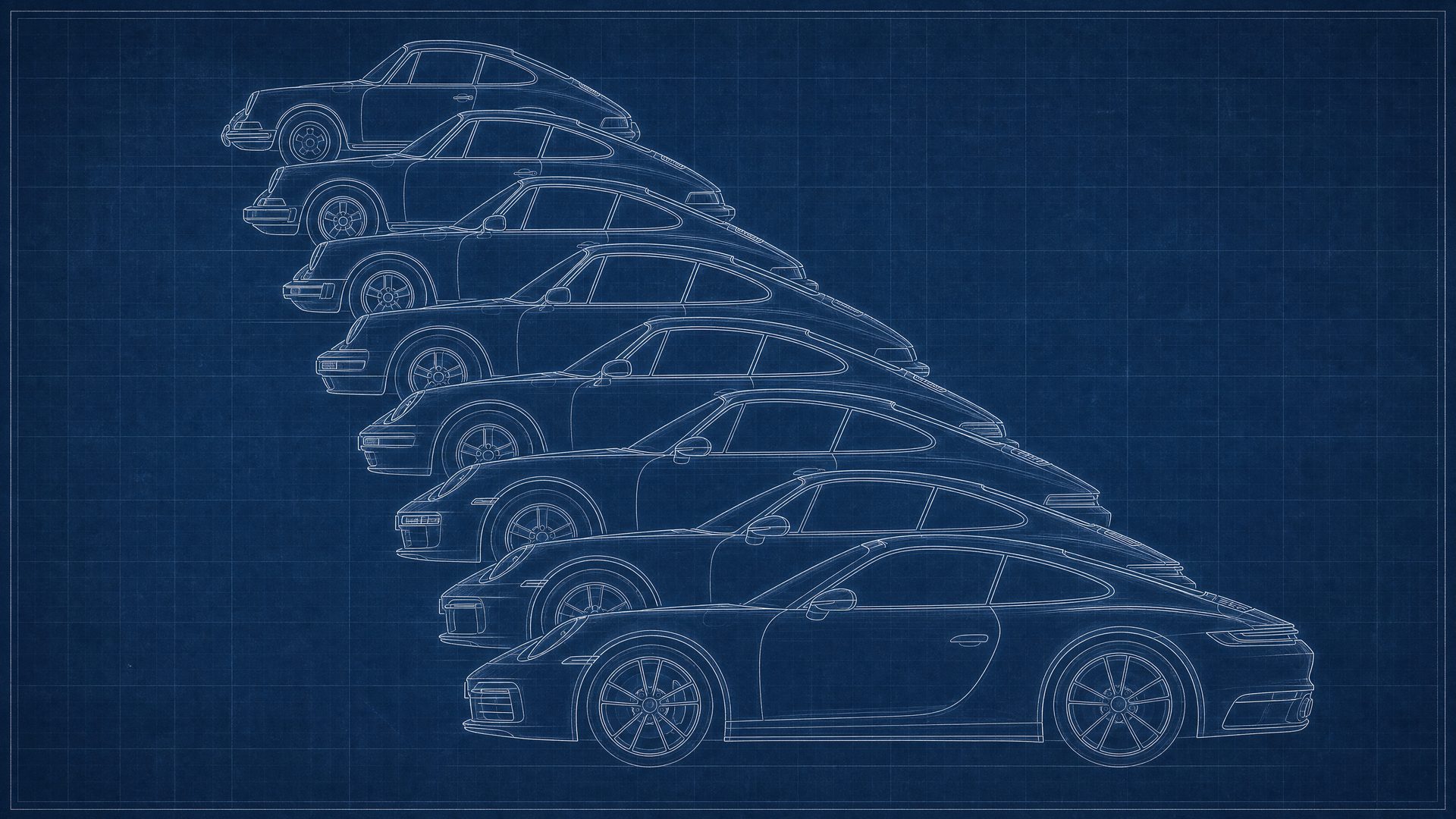
Blueprint drawing of eight Porsche 911 side elevations from 1963 to 2026, fanned and overlapping to show how the silhouette stretched and widened
Eight elevations, one profile · 1963 → 2026 · the roofline never moved
Timeline · zoom-scroll

Nine chapters, 1963 → 2026

Keep scrolling. Each generation slides in, pins, and zooms as you move through its years; the rail on the left keeps time.

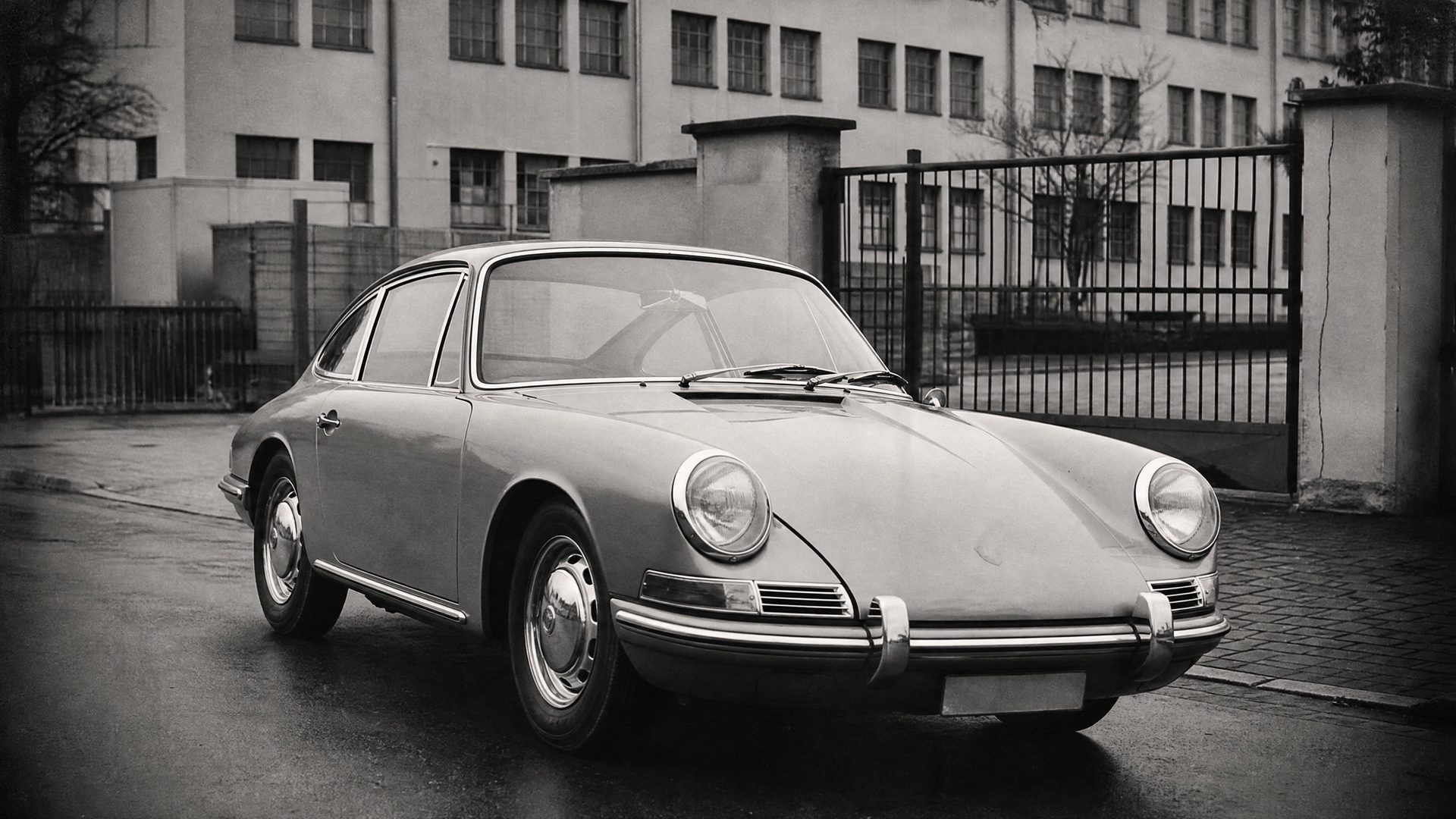
Archival black-and-white photograph of the original 1963 Porsche 911, narrow body with round headlights and chrome bumpers
Chapter 01 / 09 · Original series 1963–73
The “901” becomes the 9111963

A six-cylinder successor to the 356, drawn by the founder’s grandson

Ferdinand Alexander “Butzi” Porsche shaped the body; his cousin Ferdinand Piëch’s engineers gave it a new 2.0-litre air-cooled flat-six making 130 PS. Shown at Frankfurt as the 901, it was renamed 911 in late 1964 after Peugeot claimed every three-digit name with a middle zero — only 82 cars carried the 901 badge.

The 160 PS 911 S with Fuchs forged wheels arrived in 1966, the roll-hooped Targa in 1967, and in 1969 the wheelbase grew 57 mm to calm the tail. The recipe — rear engine, boxer six, 2+2 fastback — was set.

2.0 L flat-six130 PS @ 6,1001,080 kg210 km/h
Illustration · AI-generated in the style of period press photography
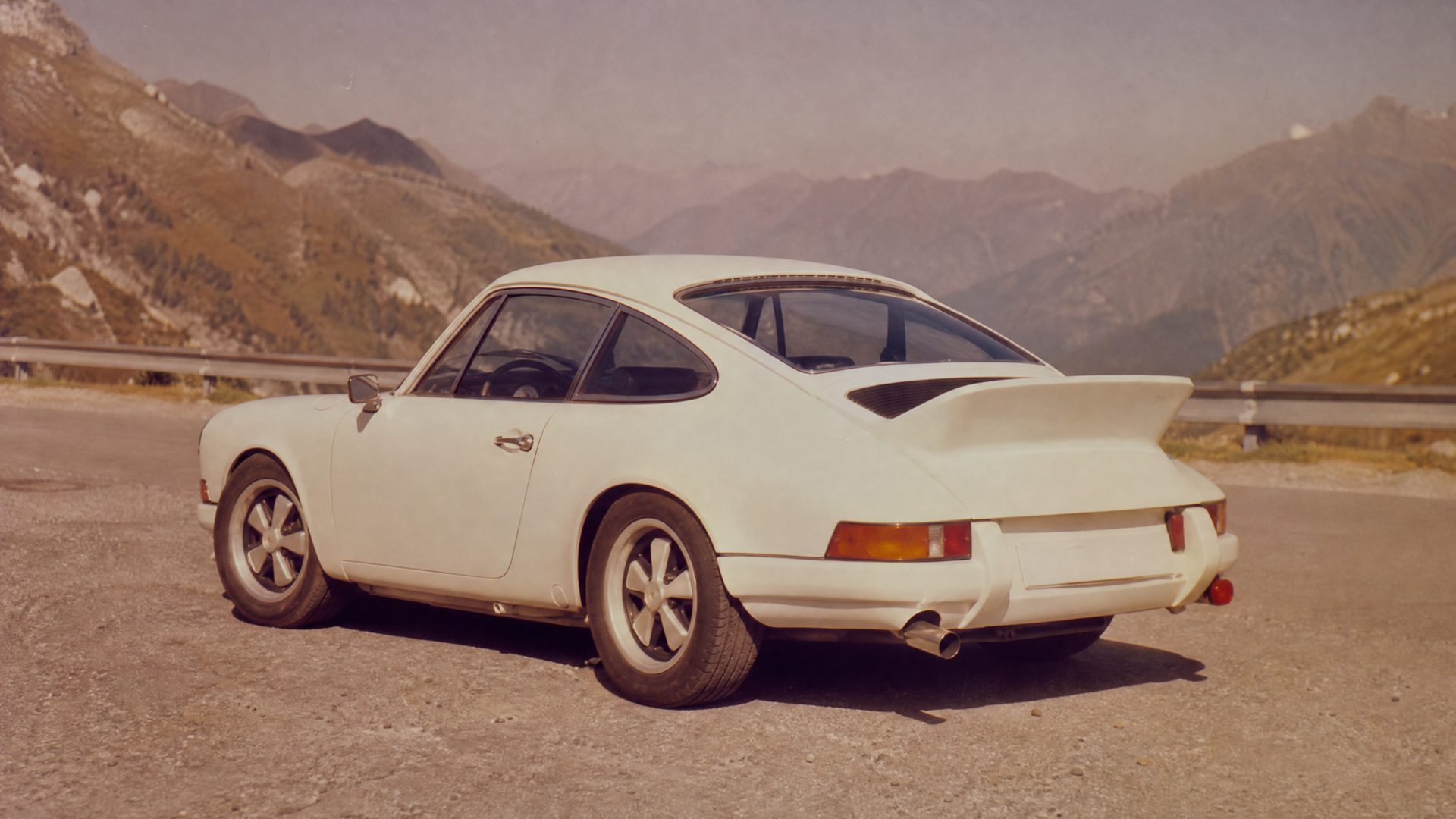
Faded 1970s colour photograph of a white 1973 Porsche 911 Carrera RS 2.7 with ducktail spoiler on an alpine road
Chapter 02 / 09 · Carrera RS 2.7
The first Carrera1973

The ducktail: a homologation special that became the icon

To go racing with the RSR, Porsche needed 500 road cars. It built the Carrera RS 2.7 — 210 PS, thin-gauge steel and glass, the first rear spoiler ever fitted to a production car — and sold 1,580 of them. Sport-spec cars weighed around 960 kg.

The RS proved that a lighter, sharper 911 was a business, not a stunt. Every GT3 since 1999, including the one at the end of this page, is a descendant of that decision.

2.7 L MFI flat-six210 PS @ 6,300~960 kg Sport1,580 built
Illustration · AI-generated in the style of period Kodachrome
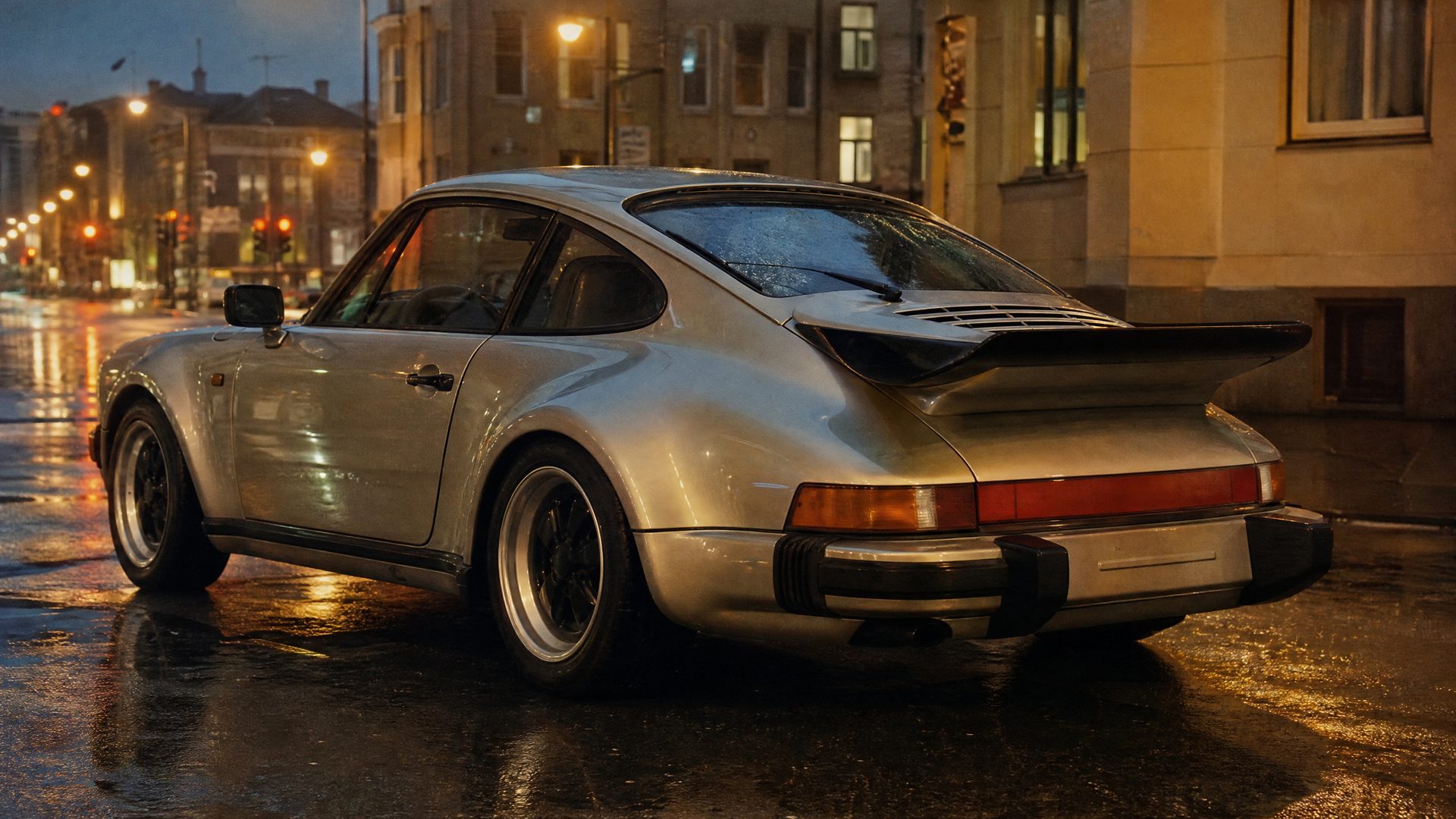
Late-1970s photograph of a silver Porsche 911 Turbo (930) with whale-tail wing on a wet city street at dusk
Chapter 03 / 09 · G-series & 930 Turbo 1974–89
The Turbo and the long G-series1975

Impact bumpers, a whale tail and the widowmaker

American crash rules brought the bellows-style bumpers of the 1974 G-series, the longest-lived 911 body (1973–89). Then, at the Paris show in October 1974, Porsche unveiled the 911 Turbo — Type 930 — a 3.0-litre, 260 PS road car with a single KKK turbocharger and a rear wing the size of a tea tray.

A 3.3-litre intercooled Turbo followed in 1978 with 300 PS. The 911 SC and the 3.2 Carrera (231 PS, 1984) kept the range honest through a decade when the company twice considered ending the car altogether.

3.0 → 3.3 L turbo260 → 300 PS0–100 5.5 s250+ km/h
Illustration · AI-generated in the style of 1970s film
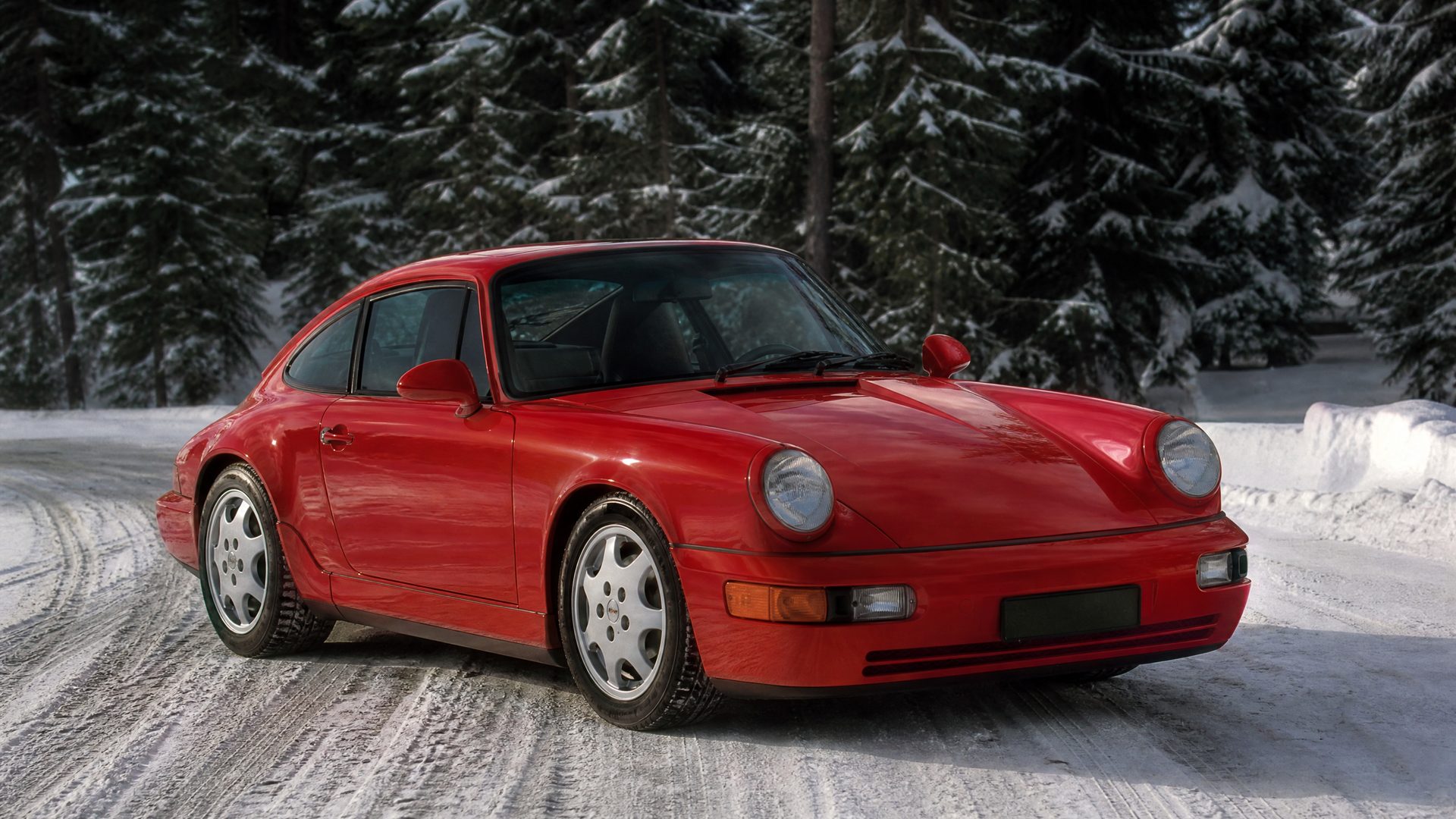
1989 photograph of a Guards red Porsche 911 Carrera 4 (964) beside a snowy forest road
Chapter 04 / 09 · Type 964 1989–94
The 9641989

“85 % new” — four-wheel drive, coil springs and a spoiler that hides

It looked like a smoothed-off G-series; underneath, almost everything had changed. The 964 arrived as the Carrera 4, the first all-wheel-drive 911, with coil springs replacing torsion bars, ABS, power steering, a 3.6-litre 250 PS engine and a rear spoiler that rose at 80 km/h.

The Tiptronic automatic came in 1990. The 964 Carrera RS of 1992 and the 3.6 Turbo of 1993 closed the era; the last air-cooled Turbo S “Flachbau” bowed out at 385 PS.

3.6 L flat-six250 PS @ 6,1001,450 kg C4AWD debut
Illustration · AI-generated in the style of late-1980s magazine photography
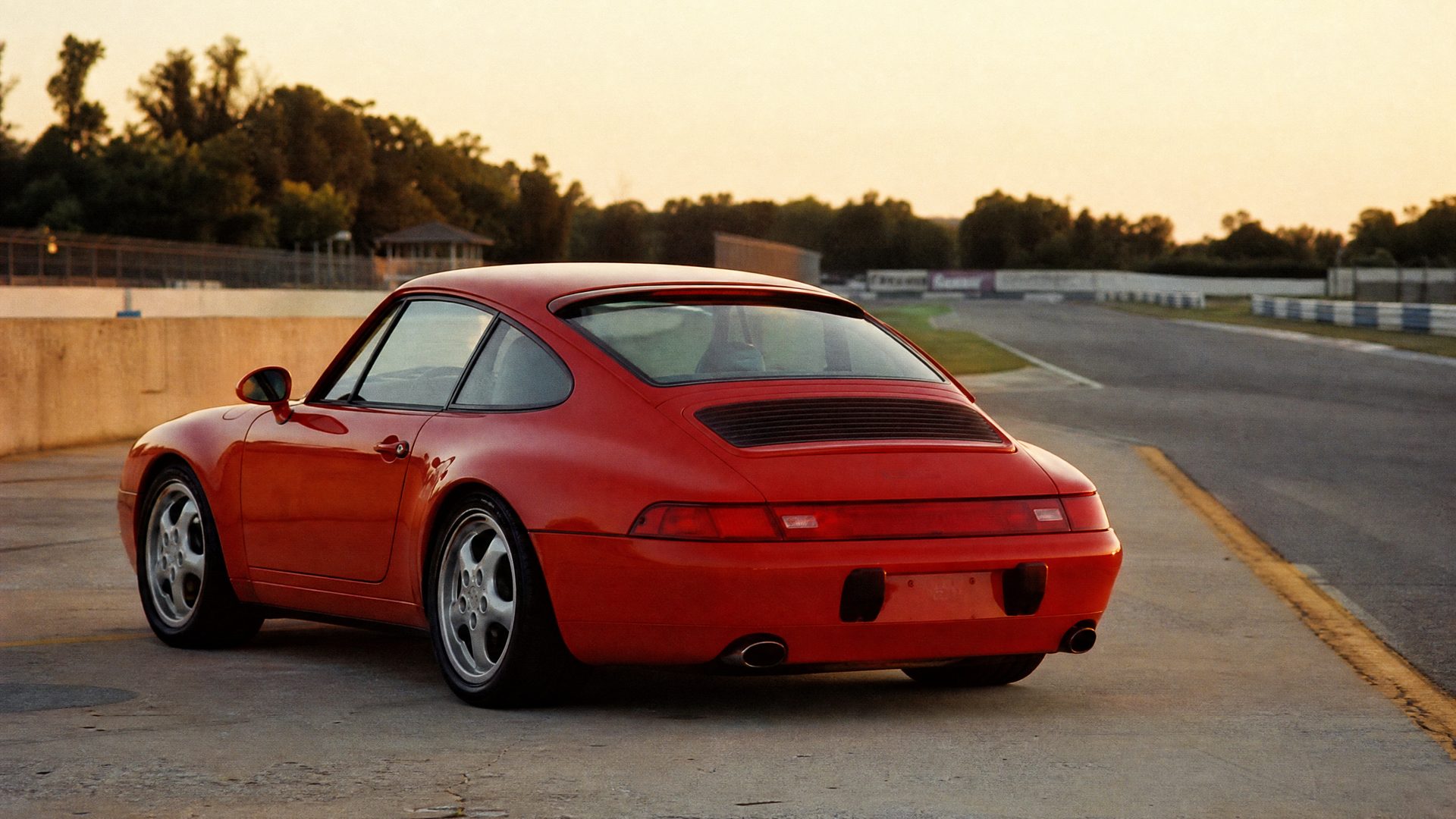
Mid-1990s photograph of a red Porsche 911 (993) at a race circuit pit exit in golden light
Chapter 05 / 09 · Type 993 1994–98
The last air-cooled 9111994

The one everybody wants: a multi-link rear axle and the end of an era

Tony Hatter’s 993 pulled the headlamps back, widened the hips and — at last — replaced the semi-trailing arms with an aluminium multi-link rear axle. The 3.6 made 272 PS, then 285 with VarioRam in 1996. The 1995 Turbo paired twin turbochargers with all-wheel drive for 408 PS; the GT2 stripped the drive to the rear and made 430.

The Targa gained its glass sliding roof. In 1998 the last air-cooled engine left Zuffenhausen. Values have never looked back.

3.6 L flat-six272 → 285 PS408 PS Turbo1998 air-cooling ends
Illustration · AI-generated in the style of 1990s film
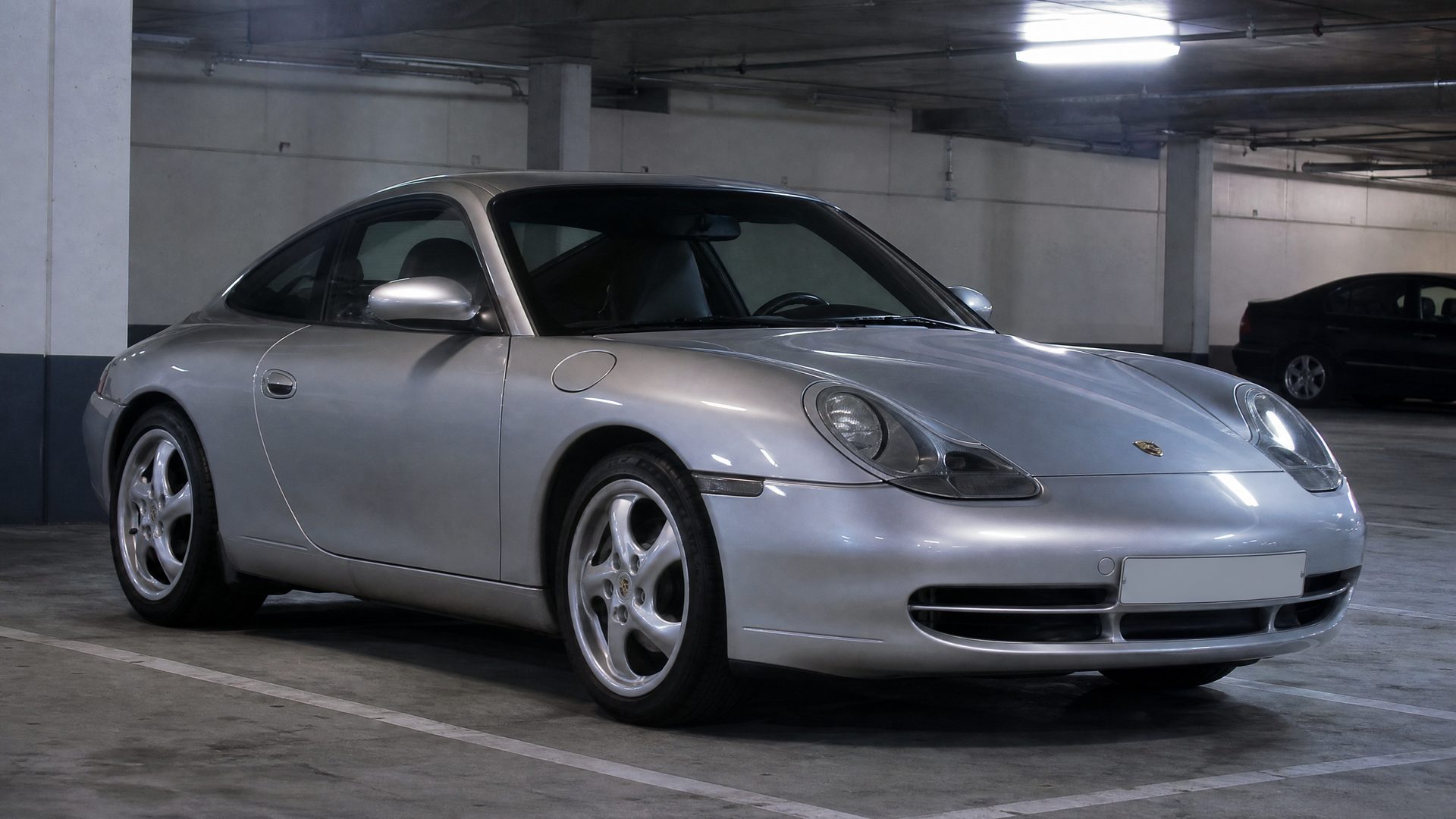
Late-1990s photograph of a silver Porsche 911 Carrera (996) with teardrop headlights in an underground car park
Chapter 06 / 09 · Type 996 1997–2004
Water-cooled, and the first GT31998

The car that saved the company — and started the GT3 line

Porsche was near bankruptcy in the early 1990s. The 996 shared its front end with the Boxster, switched to water cooling, grew in every direction and made 300 PS from 3.4 litres. Purists mourned the “fried-egg” headlamps; the accountants did not.

In 1999 Weissach fitted a dry-sump 3.6 derived from the Le Mans-winning GT1 — the Mezger engine — and called the result 911 GT3: 360 PS, 7:56 around the Nordschleife. The 420 PS Turbo (2000) and 462 PS GT2 (2001) followed; the 996.2 refresh took the Carrera to 3.6 litres and 320 PS.

3.4 → 3.6 L water-cooled300 → 320 PSGT3 360 PS · 19997:56 Nordschleife
Illustration · AI-generated in the style of late-1990s magazine photography
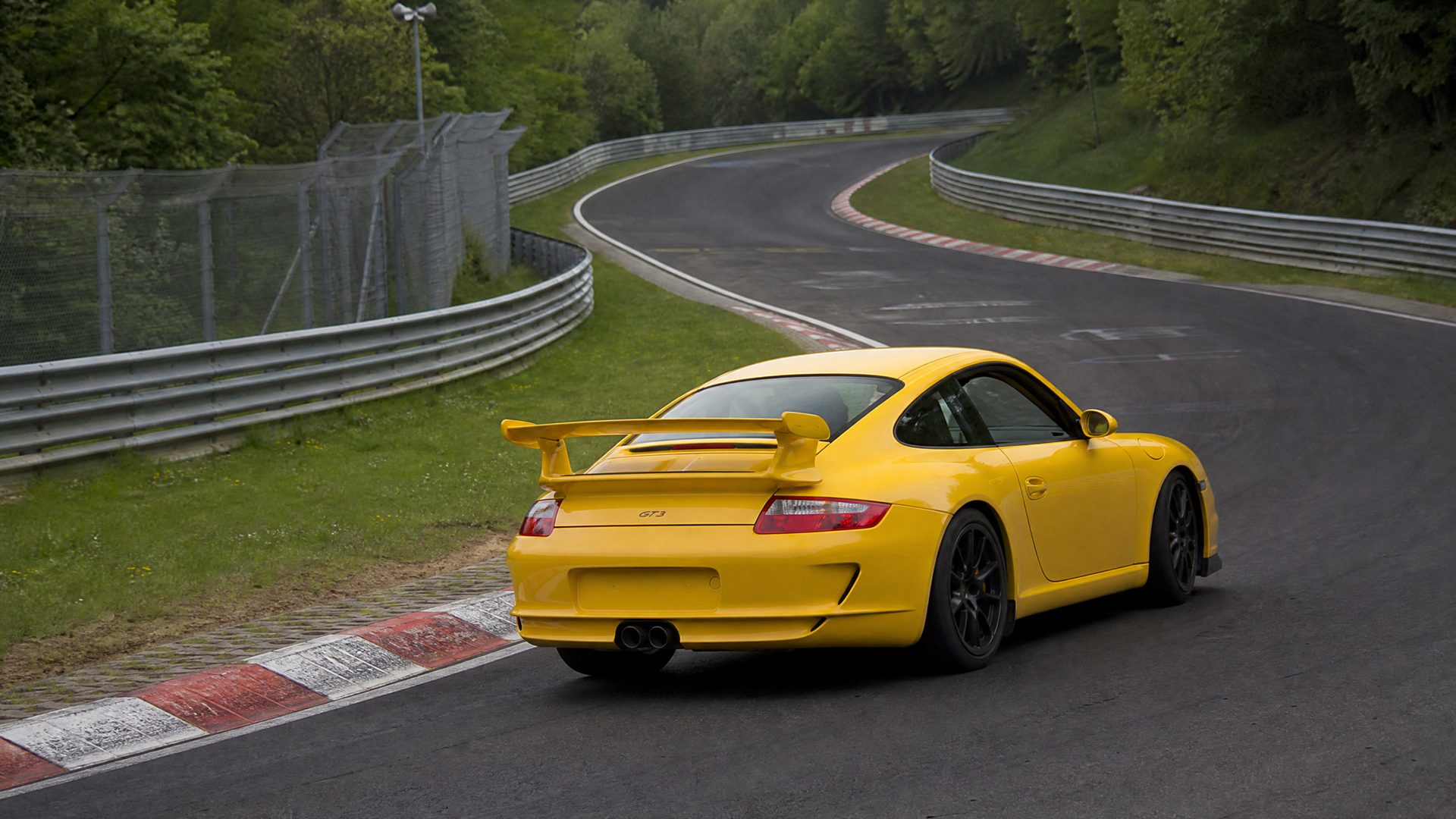
Mid-2000s photograph of a yellow Porsche 911 GT3 (997) with fixed rear wing on the Nürburgring Nordschleife
Chapter 07 / 09 · Type 997 2004–12
Round headlights return2004

The 997: direct injection, PDK and the 4.0-litre swan song

The 997 gave the round lamps back and split the range into 3.6 (325 PS) and 3.8 “S” (355 PS). The 2006 GT3 made 415 PS; the Turbo added variable-geometry turbines for 480 PS. The 2008 “997.2” brought direct injection and the seven-speed PDK dual-clutch — the gearbox Pri’s car still uses in principle.

The era ended on a high: the 620 PS GT2 RS (2010) and the 500 PS GT3 RS 4.0 (2011), 600 built, the last road-going Mezger engine.

3.6 / 3.8 L325 → 355 PS CarreraPDK 2008RS 4.0 500 PS · 600 built
Illustration · AI-generated in the style of 2000s digital photography
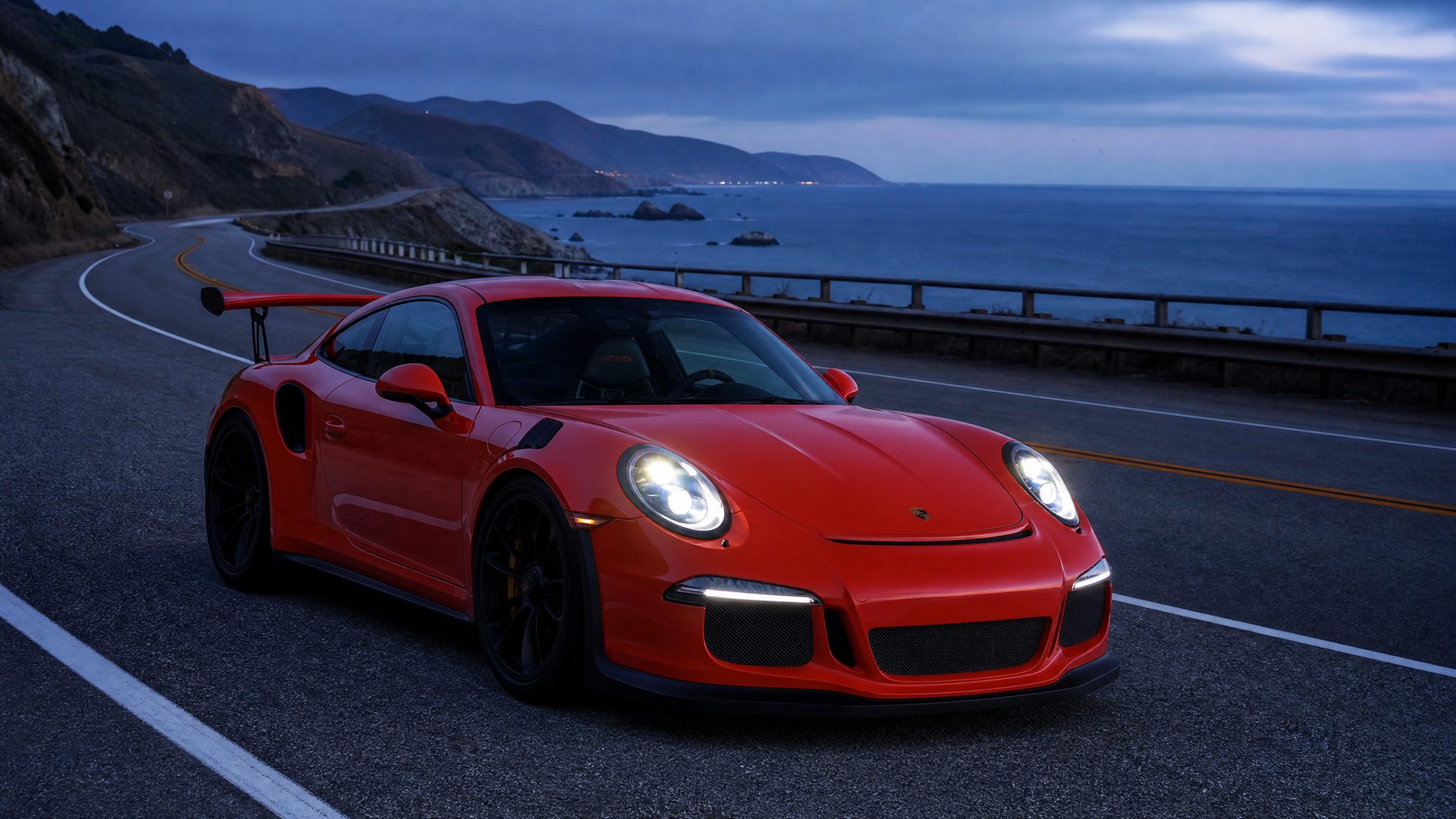
2010s photograph of a Lava orange Porsche 911 GT3 RS (991) on a coastal highway at blue hour
Chapter 08 / 09 · Type 991 2011–19
The 9912011

A new platform, 100 mm more wheelbase, and a 9,000 rpm GT3

The 991 was the third all-new 911 structure. It stretched the wheelbase by 100 mm, added a seven-speed manual and electromechanical steering, and made 350 PS (3.4) and 400 PS (3.8 S). The 2013 GT3 was PDK-only, 475 PS and the first to spin to 9,000 rpm; the manual returned with the 991.2 GT3.

The 2015 “991.2” turbocharged every Carrera (3.0 twin-turbo, 370 / 420 PS). The 500 PS 911 R (2016), the 700 PS GT2 RS (2017, 6:47.3 at the Nordschleife) and the 520 PS GT3 RS followed. In May 2017 the millionth 911 — Irish Green — left the line.

+100 mm wheelbase475 PS GT3 · 9,000 rpm700 PS GT2 RS1,000,000th 911 · 2017
Illustration · AI-generated in the style of modern digital photography
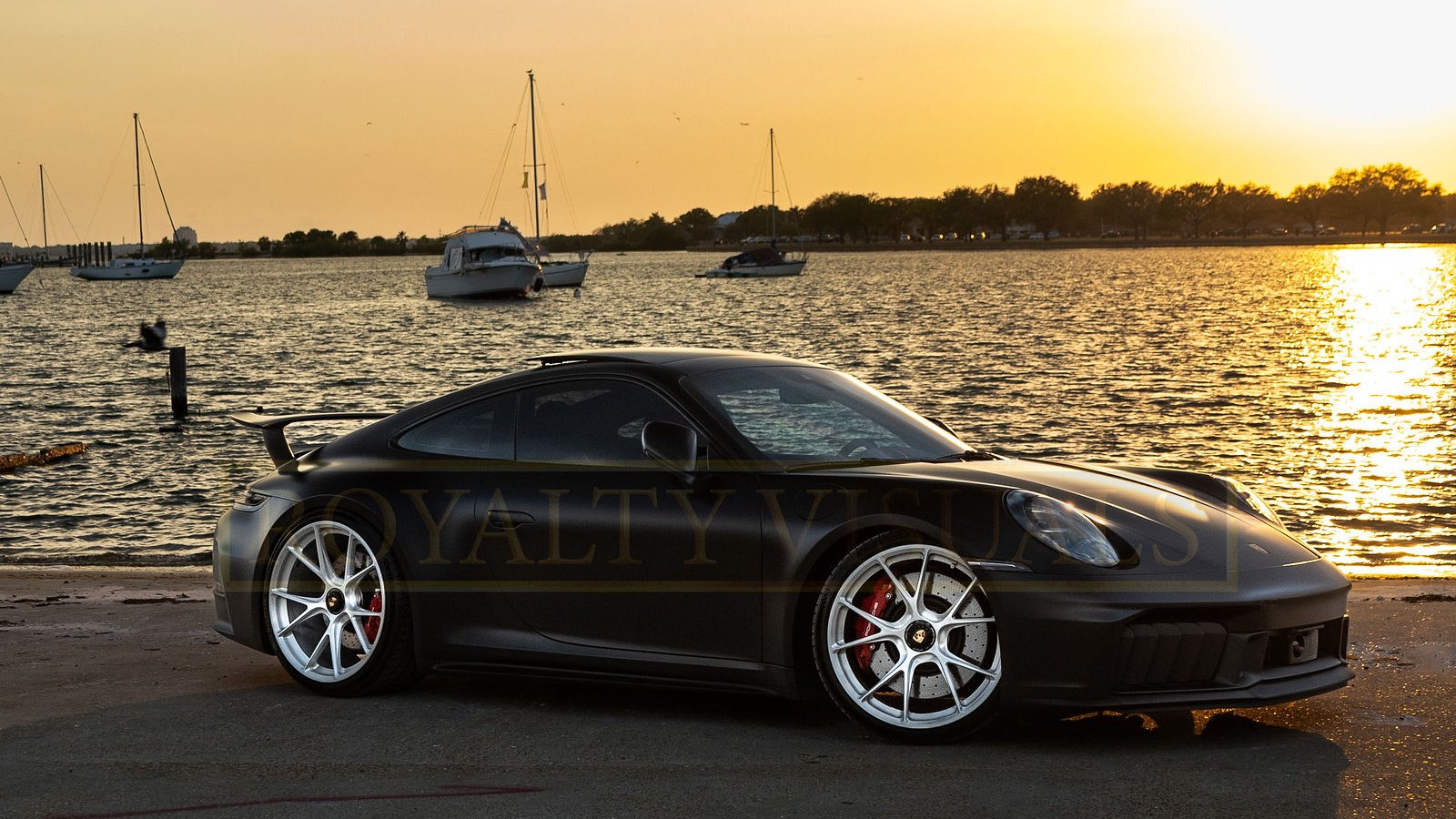
Pri’s satin-black 2026 Porsche 911 GT3 (992.2), plate 26911, side profile at golden hour on the Davis Islands waterfront, Tampa
Chapter 09 / 09 · Type 992 2019 → · Pri’s GT3
The 992 — and plate 269112026

The 992: eight speeds, a hybrid Carrera, and the last of the naturally aspirated GT3s — this one

Wider, digital, eight-speed PDK, 385 / 450 PS. The 2021 GT3 brought a double-wishbone front axle and a swan-neck wing from the RSR racer with a 510 PS, 9,000 rpm 4.0; the 2022 GT3 RS added active aero; the 2023 S/T marked sixty years. The 2024 “992.2” made the Carrera GTS a T-Hybrid (541 PS).

The 992.2 GT3 of 2025 kept the 4.0 naturally aspirated flat-six with an 8 % shorter final drive. Pri’s is a 2026 car in satin black: 502 hp at 8,400 rpm, 470 Nm, 1,435 kg, 40/60 — the shape from chapter one, sixty-three years on. The rest of this site is its record.

4.0 L NA flat-six502 hp @ 8,4009,000 rpm1,435 kg · 40/606:56.294 Nordschleife
Photograph · Royalty Visuals · Davis Islands, Tampa · April 2026
At a glance

Every generation, one table

Factory figures for the base coupé at launch (DIN / EU), plus the headline variant of each series. Pri’s car is highlighted.

SeriesYearsCoolingBase engine · powerHeadline variantWhat changed
901 / 9111963–73Air2.0 → 2.4 L · 130 → 190 PSCarrera RS 2.7 · 210 PSThe original recipe; 911 S, Targa, +57 mm wheelbase
G-series1973–89Air2.7 → 3.2 L · 150 → 231 PS930 Turbo 3.3 · 300 PSImpact bumpers; first Turbo; SC and 3.2 Carrera; Speedster
9641989–94Air3.6 L · 250 PSTurbo 3.6 · 360 PSCarrera 4 AWD, coil springs, ABS, Tiptronic, pop-up spoiler
9931994–98Air3.6 L · 272 → 285 PSTurbo · 408 PS · GT2 · 430 PSMulti-link rear axle; twin-turbo AWD Turbo; last air-cooled
9961997–2004Water3.4 → 3.6 L · 300 → 320 PSGT3 · 360 PS (1999) · GT2 · 462 PSAll-new water-cooled car; first GT3 with the Mezger engine
9972004–12Water3.6 / 3.8 L · 325 → 385 PSGT3 RS 4.0 · 500 PS · GT2 RS · 620 PSRound lamps back; DFI + PDK (2008); last Mezger
9912011–19Water3.4 / 3.8 L → 3.0 TT · 350 → 450 PSGT2 RS · 700 PS · GT3 · 475–520 PS+100 mm wheelbase; 7-speed manual; turbo Carreras (2015); millionth 911
9922019 →Water3.0 TT · 385 → 480 PS · GTS T-Hybrid 541 PSGT3 · 510 PS · GT3 RS · 525 PS8-speed PDK; double-wishbone GT3; hybrid Carrera; Pri’s 2026 GT3 — 502 hp, 9,000 rpm

Figures are Porsche’s published European ratings at launch; US SAE ratings differ slightly. Pri’s car is quoted from its own data plate — see Specifications. Corrections welcome via the community links.

Chapter ten

The rest is this car

Specifications, blueprint, cutaway, the Davis Islands sunset session, the interactive GT3 lineage chart with Nürburgring laps, and the care schedule — the living record of the 911 at the end of the timeline.

Back to the car →GT3 lineage chart
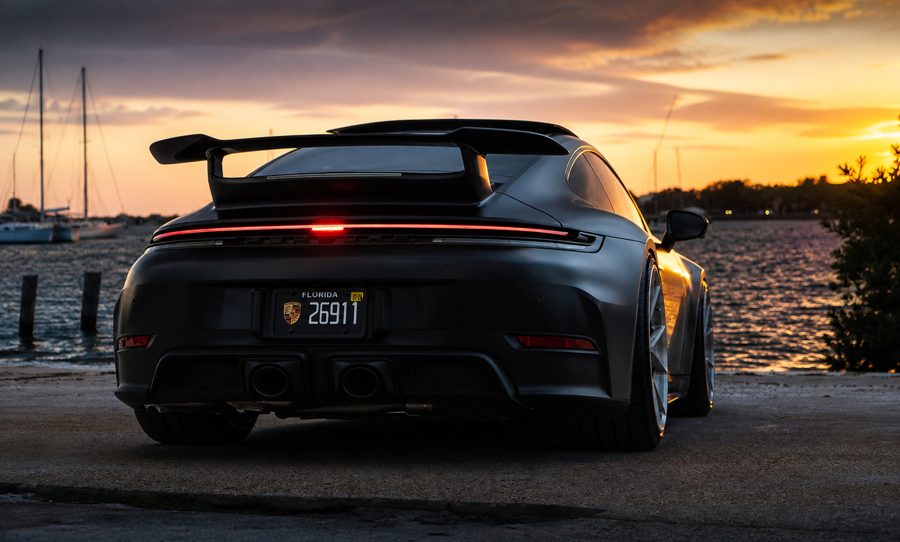
Rear view of Pri’s satin-black 992 GT3 at sunset over Hillsborough Bay, plate 26911
Plate 26911 · Hillsborough Bay · Royalty Visuals